
The Best of Both Worlds: Uniting Bitcoin's Security with Smart Contract Flexibility
In the world of cryptocurrency, two giants cast long shadows: Bitcoin, the fortress of security and value, and Ethereum, the global computer for smart contracts and decentralized applications. For years, developers and businesses faced a difficult choice: build on Bitcoin’s robust but limited network, or use Ethereum’s flexible but different security model. What if you could have both?
This is the exact problem that the Qtum hybrid blockchain solves. For the Vietnamese market, where tech adoption is rapid and investors seek innovative opportunities, Qtum represents a powerful convergence of proven security and next-generation functionality. It is designed to bring Bitcoin smart contracts to life in a secure and efficient way.
This guide will direct you through the essentials of Qtum. You will learn how its unique architecture works, see real-world examples of its power, and understand how to engage with this asset on a trusted platform like HIBT.
Part 1: What is Qtum? Decoding the Hybrid Blockchain
Qtum (pronounced "Quantum") is not just another cryptocurrency. It is a public blockchain platform built to combine the best features of Bitcoin and Ethereum into a single, business-friendly ecosystem.
The Core Problem: Bitcoin vs. Ethereum
- Bitcoin uses the Unspent Transaction Output (UTXO) model. Think of it as digital cash. It is incredibly secure and reliable for transferring value, but it was not designed to run complex applications.
- Ethereum uses an Account-Based model, similar to a bank account. This model is perfect for running smart contracts and decentralized applications (dApps), creating a vibrant ecosystem of innovation.
The challenge was that these two models were incompatible. You couldn't easily run Ethereum's smart contracts on Bitcoin's secure UTXO backbone.
The Qtum Solution: The Account Abstraction Layer (AAL)
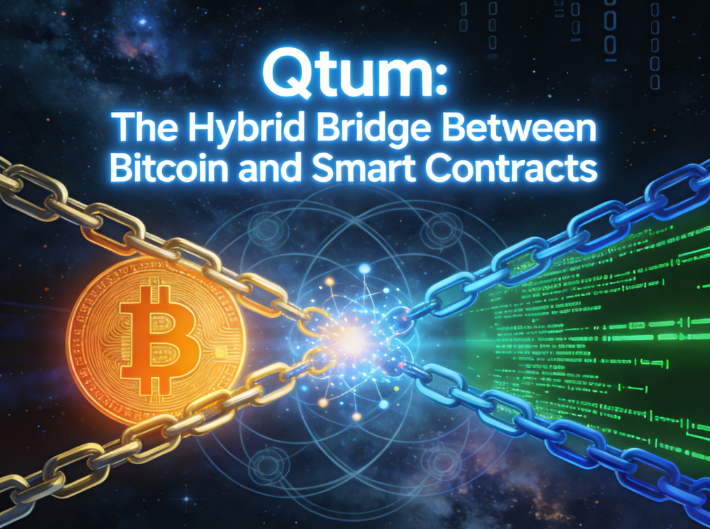
Qtum's developers created a groundbreaking solution: the Account Abstraction Layer (AAL). This technology acts as a bridge, or a translation layer, between Bitcoin's UTXO model and the Ethereum Virtual Machine (EVM), which runs smart contracts.
Here’s how to understand it:
- Foundation: Qtum is built on a modified version of the Bitcoin Core code, inheriting its UTXO security and reliability.
- The Bridge: The AAL sits on top of this foundation, allowing it to "speak the language" of the EVM.
- Functionality: Developers can now build and deploy Ethereum-style smart contracts that execute on a secure, Bitcoin-like base layer.
This hybrid approach means Qtum offers the stability of Bitcoin combined with the endless possibilities of smart contracts.
Part 2: Why a Hybrid Blockchain Matters for Vietnam
Vietnam’s digital economy is booming. From supply chain management to finance and mobile applications, businesses need secure and flexible blockchain solutions. This is where Qtum's unique advantages become critical.
1. Enterprise-Ready Applications
Many businesses in industries like logistics and manufacturing are hesitant to build on public blockchains due to perceived security risks.
- The Qtum Advantage: By using Bitcoin’s UTXO model, Qtum provides a level of security that enterprises trust. This makes it an ideal platform for building dApps that handle sensitive data or high-value transactions.
- Case Study: Supply Chain Management. A Vietnamese seafood exporter could use a Qtum-based dApp to track its products from the farm to international markets. Each step is recorded as a transaction on the secure UTXO layer, while smart contracts automatically handle customs compliance and payments. This creates a transparent and trusted system.
2. Mobile-First dApps
With mobile usage at 89% in Vietnam, applications must be lightweight and accessible on the go.
- Qtum's Design: Qtum was designed with mobile in mind. Its Proof-of-Stake consensus mechanism is far less energy-intensive than Bitcoin's Proof-of-Work, making it suitable for running on mobile devices.
- Real-World Example: Decentralized Social Media. A developer could build a decentralized social media app on Qtum. Users could control their own data and even earn Qtum tokens for creating popular content, with all interactions secured by smart contracts on a mobile-friendly network.
3. Proof-of-Stake (PoS) Efficiency
Unlike Bitcoin's mining, which requires massive amounts of electricity, Qtum uses a Proof-of-Stake (PoS) consensus mechanism.
- How it Works: Instead of mining, users "stake" their Qtum tokens to help secure the network and validate transactions. In return, they receive rewards.
- The Benefits for Investors:
- Accessibility: Anyone can participate in staking, not just those with powerful mining hardware.
- Energy Efficiency: PoS is environmentally friendly, a growing concern for modern investors.
- Passive Income: Staking provides a way for Qtum holders to earn rewards on their investment.
Part 3: Your Guide to Investing in Qtum
Understanding Qtum's potential is the first step. The next is to acquire the asset through a secure and trusted channel. This is where choosing the right platform is essential.
Step 1: Select a Secure Trading Platform
For investors in Vietnam, security, ease of use, and local support are top priorities. HIBT is designed to meet these needs, providing a gateway to the world of digital assets.
Why Choose HIBT?
- Empower Your Investments: Access a wide range of assets, including innovative projects like Qtum.
- Localized for Your Ease: Navigate a platform with a Vietnamese interface and dedicated customer support.
- Secure Your Future: Trade with confidence, knowing your assets are protected by multi-layer security protocols.
Step 2: Create and Secure Your Account
- Navigate to the HIBT website or download the app.
- Complete the simple registration process.
- Enable Two-Factor Authentication (2FA) to add an essential layer of security to your account.
Step 3: Deposit and Execute Your Trade
After registration, you can deposit funds into your account. Go to the trading section, find the QTUM/USDT pair, and place your buy order. You are now invested in a leading hybrid blockchain platform.
Part 4: Qtum vs. The Competition: A Strategic Comparison
To fully grasp Qtum's position in the market, it's helpful to compare it directly to its predecessors and competitors.

Key Takeaway for Investors:
Qtum is not a "Bitcoin killer" or an "Ethereum killer." It is a strategic evolution that combines the strengths of both. It carves out a unique niche by targeting enterprise and mobile applications that require both high security and smart contract flexibility. For a diversified portfolio, Qtum offers exposure to the crucial bridge between the first and second generations of blockchain.
Part 5: Exploring the Qtum Ecosystem in Action
Qtum's technology has enabled a variety of projects across different industries, demonstrating its real-world utility.
Case Study A: Decentralized Domain Naming
One of the early projects on Qtum aimed to create a decentralized domain name system. Instead of relying on a central authority like ICANN, users could register and own domain names as unique assets on the Qtum blockchain. Smart contracts would handle the registration and renewal processes, making the system censorship-resistant and transparent.
Case Study B: Gaming and NFTs
The gaming industry is a perfect fit for Qtum. Developers can create in-game items as Non-Fungible Tokens (NFTs) on the Qtum blockchain.
- Scenario: A Vietnamese game studio develops a popular mobile game. Players can buy, sell, and trade unique swords or armor as NFTs. Because these items are on the Qtum blockchain, players have true ownership, and the transactions are secured by the UTXO model. The game's economy is run by smart contracts, ensuring fairness.
Decentralized Governance Protocol (DGP)
A key innovation of Qtum is its Decentralized Governance Protocol. This allows certain blockchain parameters, like block size, to be modified without a hard fork (a major, disruptive network split). Qtum holders can vote on proposed changes using smart contracts. This makes the network adaptable and future-proof, allowing it to evolve with the needs of its users and businesses.
Part 6: Risks and Investment Considerations
Like any crypto asset, investing in Qtum comes with risks that every investor must understand.
- Competition: The blockchain space is highly competitive. Newer platforms like Solana and Cardano also offer smart contract capabilities with different trade-offs. Qtum must continue to innovate to maintain its edge.
- Adoption Rate: The ultimate success of Qtum depends on how many developers and businesses choose to build on its platform. While it has strong technology, driving widespread adoption is an ongoing challenge.
- Market Volatility: The price of QTUM, like all cryptocurrencies, can be highly volatile. It is an investment best suited for those with a medium-to-high risk tolerance.
Investor Tip: Always do your own research. View Qtum as a long-term play on the growth of business-oriented blockchain solutions. For managing your portfolio and executing trades, use a trusted platform that provides security and deep liquidity, such as HIBT.
Part 7: The Technical Edge - Qtum's Unplugged x86 VM
While Qtum started with EVM compatibility, its vision extends further. The team has developed a new virtual machine, the Qtum x86 VM. This is a significant leap forward.
- What it is: The x86 VM allows developers to write smart contracts in popular, mainstream programming languages like C++, Rust, and Python, instead of being limited to Ethereum's Solidity.
- Why it Matters: This dramatically lowers the barrier to entry for millions of developers worldwide. A Vietnamese software developer who already knows C++ can start building dApps on Qtum without having to learn a new language. This has the potential to massively accelerate the growth of the Qtum ecosystem.
Part 8: The Future of Qtum: DeFi and Beyond
With a solid foundation and a growing developer toolset, Qtum is well-positioned to expand into the booming world of Decentralized Finance (DeFi).
- DeFi on Qtum: By leveraging its EVM compatibility, developers can easily port existing Ethereum DeFi projects to Qtum or build new ones from scratch. Users could engage in lending, borrowing, and decentralized exchange trading on a platform with the underlying security of the UTXO model.
- Staking and Neutron: Qtum's ecosystem includes tools like Neutron, which helps manage smart contract calls, and a robust offline staking mechanism. Offline staking allows users to delegate their tokens to a super staker to earn rewards without having to keep their own wallet online 24/7. This makes participating in network security both easy and secure.
Conclusion: Seize the Opportunity of Hybrid Innovation
The blockchain industry is constantly evolving. The initial debate of "Bitcoin vs. Ethereum" has given way to a more nuanced landscape where hybrid solutions thrive. Qtum stands as a testament to this evolution, providing a robust, secure, and flexible platform for the next generation of decentralized applications.
By intelligently combining the battle-tested security of Bitcoin's UTXO model with the dynamic power of Ethereum's smart contracts, Qtum has created a unique value proposition for businesses, developers, and investors. For the forward-looking Vietnamese market, it offers a gateway to building and investing in the future of enterprise blockchain.
The tools for building a decentralized future are here. Don't be a spectator. Empower your investments and become part of this technological revolution.
To start your journey into the world of hybrid blockchains and other digital assets, register your account on HIBT today. Join the community, trade effortlessly, and secure your future.
About the Author
Dr. Kenji Tanaka
PhD in Cryptographic Systems, Lead Auditor for the Cypher-Audit Group
Dr. Kenji Tanaka is a renowned figure in applied blockchain technology. He holds a PhD in Cryptographic Systems and has authored over 20 peer-reviewed papers on consensus algorithms and virtual machine architecture. Dr. Tanaka has led the security audits for five top-50 blockchain projects, focusing on the intersection of UTXO-based security and smart contract execution. His work is dedicated to developing enterprise-grade blockchain solutions that are both secure and highly functional.